


SO WHAT IS HERITAGE?
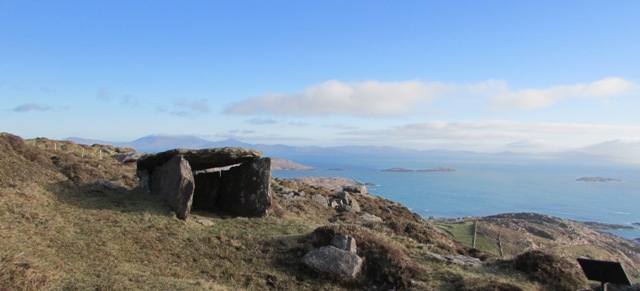
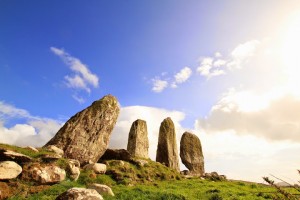
Wedge tomb, Coomachoiste – credit Julie Ormonde
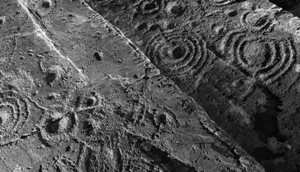
Heritage is an essential part of the present we live in–and of the future we will build. Heritage includes, but is much more than preserving, excavating, displaying, or restoring a collection of old things. It is both tangible and intangible, in the sense that ideas and memories–of songs, recipes, language, dances, and many other elements of who we are and how we identify ourselves–are as important as historical buildings and archaeological sites. This page of the website mainly covers the ancient history of the Kerry Reserve Space because of its unique qualities and seeks:
- To protect the stone monuments from any vandalism – either intentional or un-intentional.
- To persuade government and local authorities to take better care of our unique outdoor treasures.
- To encourage more excavations and investigation by archaeologists, and third level institutions – National and International.
- To have each monument professionally photographed and correctly mapped.
UNESCO WORLD HERITAGE SITE – THE SKELLIG ISLANDS
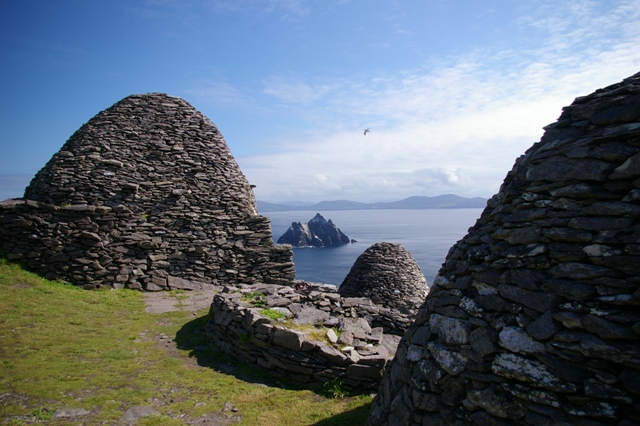
“An incredible, impossible, mad place…I tell you the thing does not belong to any world that you and I have lived and worked in: it is part of our dream world” … George Bernard Shaw
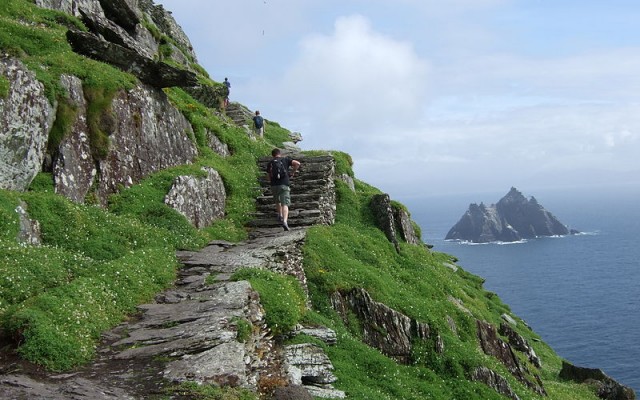
The UNESCO World Heritage Site of the Skellig Islands are without equal. Only visiting them can convey the whole majesty of the place. The little beehive huts have survived many thousands of storms, a real testament to the skill and tenacity of the monks who built them. Surviving the excesses of nature and seeking out food on the barren rock must have been time consuming, stretching the limits of human endurance to its limits. The solitary lives of the monks are of an age long past, who can ever know if they ever found the peace they were looking for. Though we can never know their intent for staying in such a remote ‘God Forsaken’ place, we owe the hermits of the islands no less than that we protect and cherish their efforts. To be the only Dark-Sky Reserve in the world with such a charge is a great honor and a privilege.
GUIDED HERITAGE WALKS AND TALKS
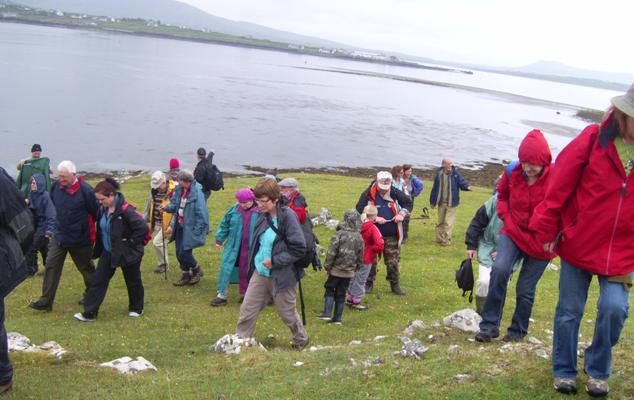
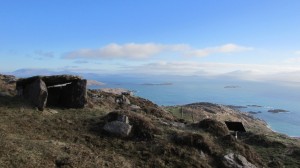
Outdoor heritage talk at Bolus Head – credit Julie Ormonde
Guided Heritage walks and talks are advised, it saves a lot of time in looking for the place you are interested in, plus, having an expert telling you about the history of the region beats reading it from a book. You can contact here to enquire or book a guide .

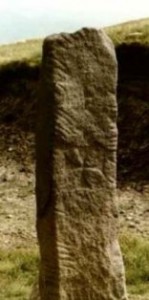 Ogham is the earliest form of writing in Ireland, it dates to around 4th century A.D. and was in use for around 500 years. The Ogham alphabet is made up of a series of strokes along or across a line. Ogham is sometimes referred to as the "Celtic Tree Alphabet" as a number of the letters are linked to old Irish names for certain trees. The alphabet was carved on standing stones to commemorate someone, using the edge of the stone as the center line. They normally read from the left hand side bottom up, across the top and if need be down the other side.